AT's 2 Cents
Coming to AmaniTouch for Pain? Here's What to Expect
Ofure Osifo ·
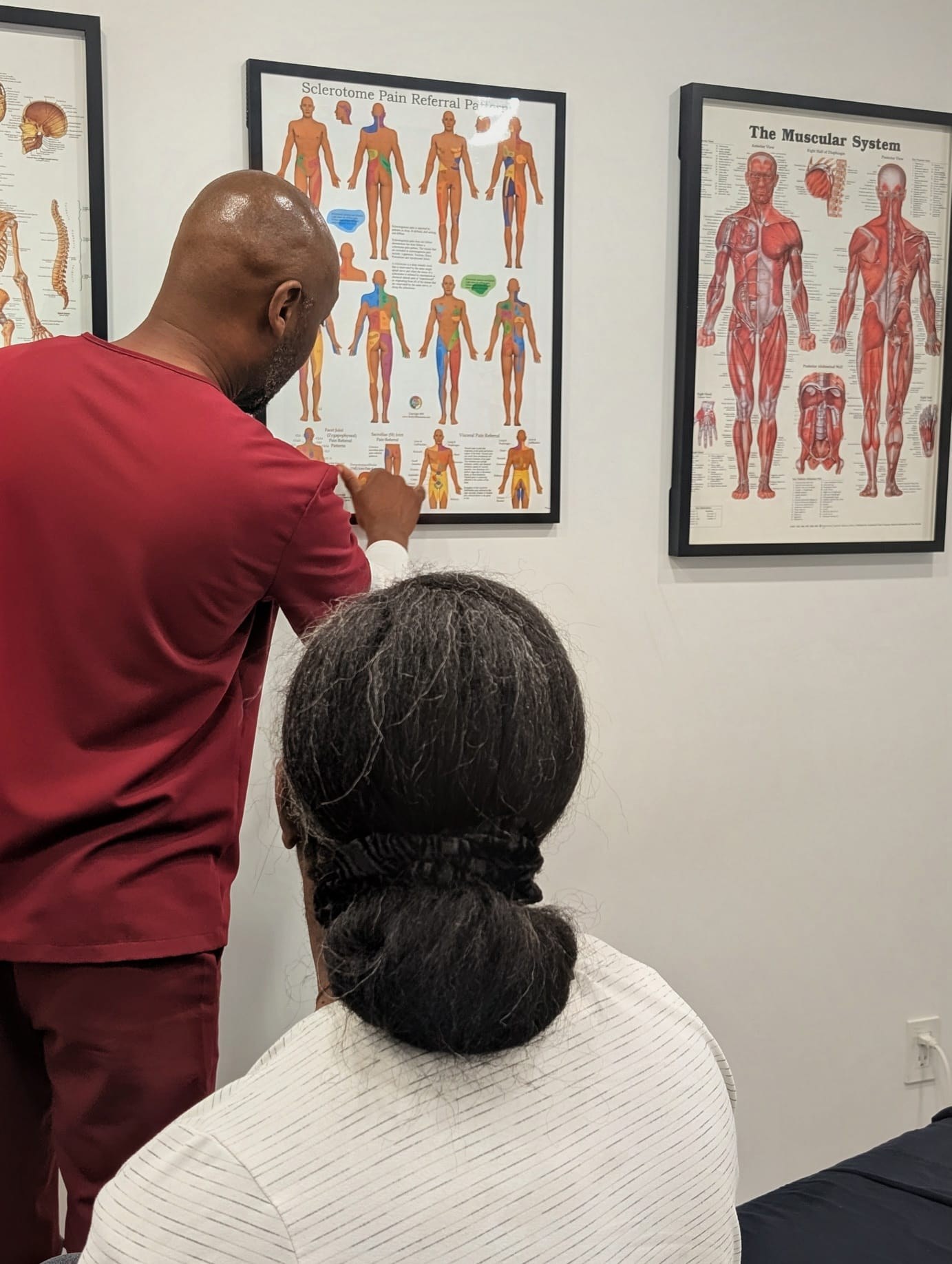
Something interesting happens quite often when clients come to AmaniTouch because of a musculoskeletal issue or pain.
They know something hurts, but when I ask them to describe exactly what they're feeling, sometimes they struggle to find the words.
And that's perfectly okay.
You don't need to arrive knowing whether your pain is dull, aching, throbbing, tingling, pinching or something else. Part of my job is to ask questions that help me understand what you're experiencing.
So, if you're coming to AmaniTouch for a pain-related concern, here are some of the questions you can expect:
What I May Ask You | Why It Matters |
Where are you experiencing the pain? | Helps identify the area of concern. |
How long have you had it? | Helps establish whether this is recent or persistent. |
What do you do for a living? | Your work and daily activities may be relevant to what you're experiencing. |
What aggravates the pain? | Certain movements, positions or activities may make it worse. |
What makes it feel better? | Rest, movement, heat or other factors may change what you feel. |
On a scale of 1-10, how would you rate it? | Gives us a reference point for how you are experiencing the pain. |
Is it better or worse at certain times of day? | Your symptoms may change throughout the day. |
Have you seen another healthcare professional? | Helps us understand whether you've already been assessed or received recommendations. |
What does the pain feel like? | Dull, aching, throbbing, tingling, pinching and other descriptions provide useful information. |
“But I Already Filled Out the Health Form!”
Yes - and I'm probably still going to ask you some of these questions again.
There is a reason.
Your condition may have changed between completing your health form and arriving for your appointment. Something may feel better, something may feel worse, or you may remember information that you didn't include on the form.
I want the information we're working with today, not simply what was true when you completed the questionnaire.
Why Do We Ask So Many Questions?
The answers help me decide what may be appropriate for your session: the areas we should focus on, the techniques or maneuvers that may be suitable, the intensity of the work and what kind of treatment plan I may propose.
But the questions serve another important purpose.
Sometimes what a client describes tells me that massage may not be the appropriate next step.
AmaniTouch does not diagnose medical conditions. If the information you provide suggests that your concern requires assessment outside my scope of practice, I may recommend that you speak with your family doctor or another appropriate healthcare professional before proceeding.
Sometimes good professional judgment means knowing when not to massage.
You Don't Have to Know How to Explain Everything
If you're experiencing pain but don't know exactly how to describe it, don't let that stop you from coming in.
Start with what you know: Where does it hurt? How long has it been there? What makes it worse? What makes it better?
We'll take it from there.
Not sure where to start? Book your complimentary 15-minute Pain Assessment.
AmaniTouch — Therapeutic Massage & Pain Relief | St-Constant, Québec J5A 2B9
Share your thoughts privately
Your message goes privately to AmaniTouch and will not be published. Your name and email let us reply; they do not verify your identity. Please be respectful and do not include sensitive medical information.