AT's 2 Cents
Deep Tissue Massage for Persistent Back Tension (When Deeper Pressure May Be Appropriate)
Ofure Osifo ·
If you have ever received a relaxation massage and thought, “That felt wonderful, but the tension in my back is still there,” there may be a reason.
Not every area of muscular tension responds to the same type of massage.
Some clients come to AmaniTouch primarily to relax. Others arrive with a very different goal: there is a particular area of the back, neck or shoulders that continues to feel tight, uncomfortable or restricted, and they want focused attention on that area.
In these situations, the conversation before and during the massage becomes extremely important.
Relaxation Massage and Targeted Therapeutic Work Have Different Goals
A Swedish-based relaxation massage typically uses flowing movements and pressure adapted to the client's comfort. For someone whose primary goal is relaxation, reducing everyday tension and simply taking time for themselves, this can be an excellent choice.
But a client seeking relief from persistent muscular tension may need a different approach.
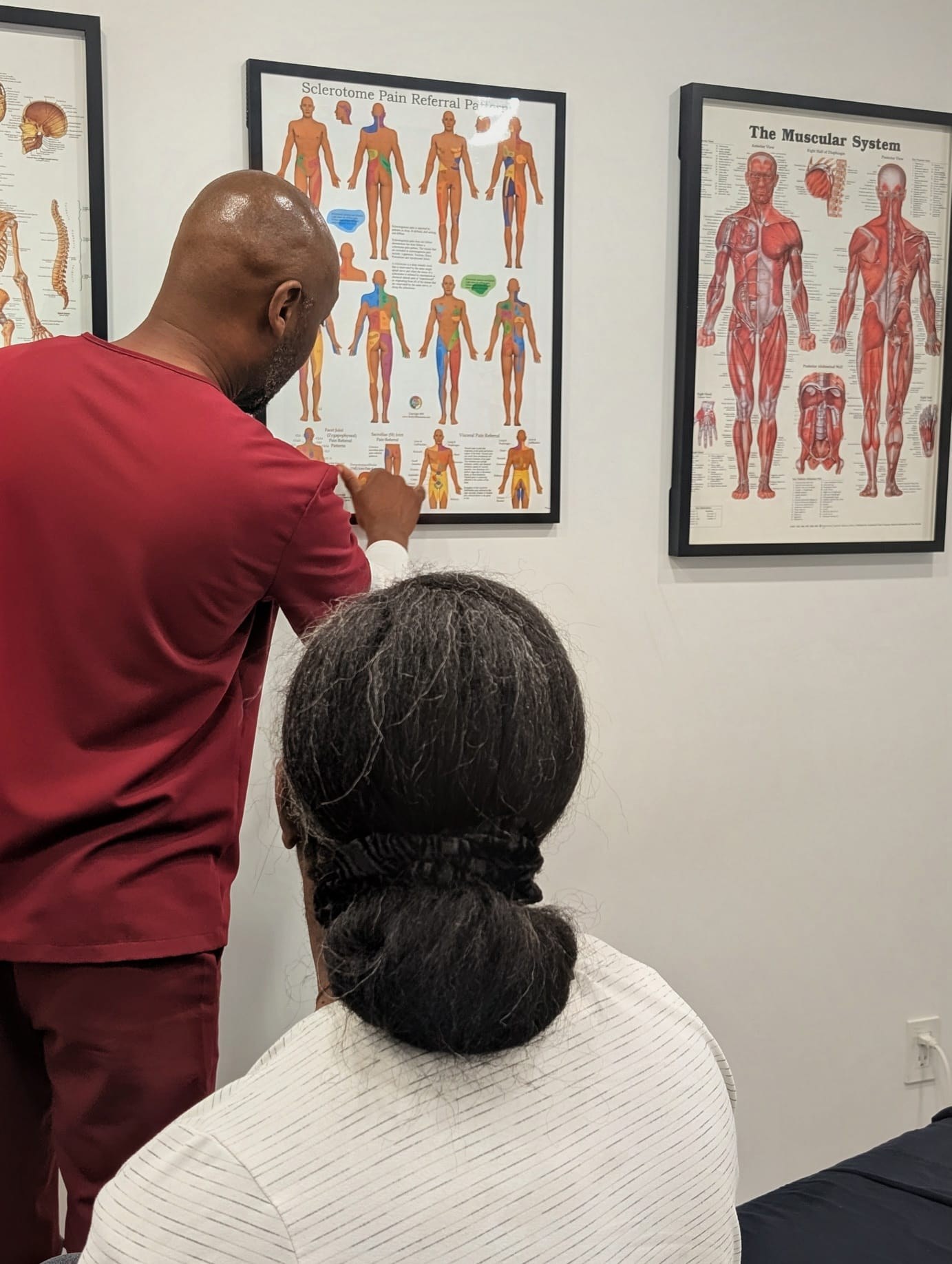
One area I frequently encounter in practice is the region around the rhomboid muscles, between the shoulder blades.
These muscles lie beneath the trapezius and can become an area of significant tension and tenderness. This is something I often encounter with clients who spend long periods sitting at a desk or working at a computer.
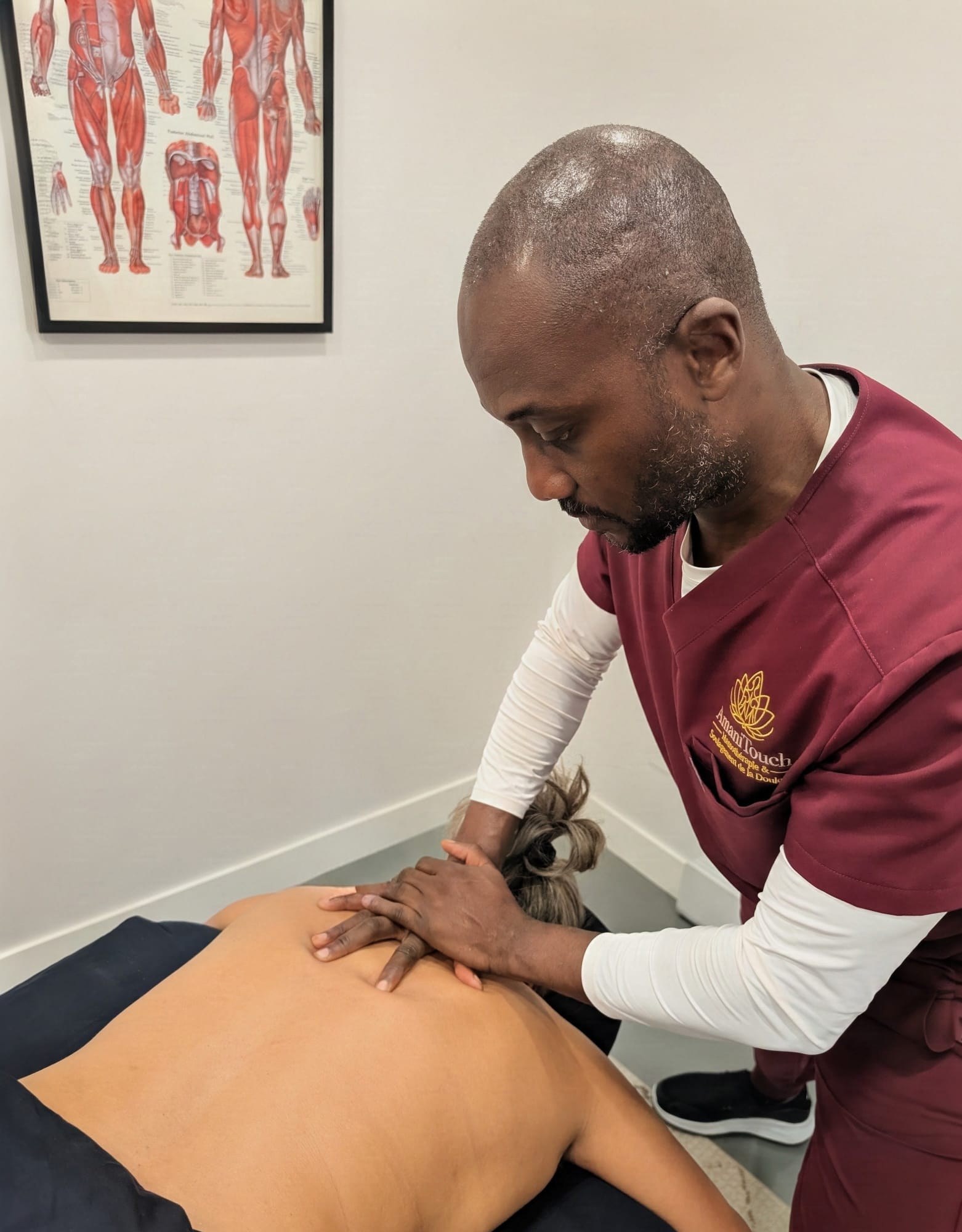
When I encounter a particularly tense area during a therapeutic session, I may recommend more focused work and, where appropriate, deeper pressure.
That does not mean simply pressing harder.
Deep tissue work requires control, patience and finesse.
The objective is to work progressively and deliberately with the area rather than applying excessive pressure indiscriminately.
Sometimes Therapeutic Work Can Be Uncomfortable
This is something massage therapists should discuss openly with their clients.
When focused pressure is applied to an already tender or highly tense area, the client may experience discomfort.
That should never come as a surprise.
Before doing deeper work, I believe the therapist should explain what they are recommending, why they are recommending it, what the client may experience and what alternatives are available.
Then the client decides.
That communication can make an enormous difference in whether the client's expectations are ultimately met.
I had an experience at AmaniTouch that illustrates this perfectly.
A Client Who Didn't Want Deep Pressure
One of my regular clients comes to AmaniTouch every two weeks.
Part of her commitment is simply taking care of her body, but she also experiences persistent tension around her rhomboid area.
During her first visit, after discussing what she was experiencing and working with the area, I explained that I would recommend some deeper, more focused therapeutic work around that region.
I also explained something equally important: It might be uncomfortable.
Her answer was very clear. She didn't want pain during her massage.
She preferred that I use gentler pressure, even if addressing the tension required multiple massage sessions.
And that was her decision.
So I listened.
I reduced the pressure and provided the massage according to her comfort level.
She was very satisfied with her session and returned.
At her second appointment, she gave me the same instruction: no deep work around the rhomboids.
Again, I respected her preference.
But the tension she wanted addressed had not improved to the degree she had hoped.
Then came her third visit.
And this time, she walked in with a very specific request:
“I want you to spend 45 minutes working on my back, and I want you to apply deep pressure.”
I immediately asked her what had changed.
She explained that she wasn't getting the level of relief she wanted and was now ready for me to perform the deeper work I had originally discussed with her.
So we changed the treatment approach.
When the Client's Goal Changed, the Treatment Changed
I spent the requested time working more deeply and deliberately through her back, including the areas of persistent tension.
When the work was finished, she sighed. Then she said: “Très bien.”
She told me that she felt immediate relief. She described feeling greater blood flow through the area and noticed that her movement felt easier afterward.
But something else happened that mattered just as much to me.
Trust had been built.
Not because I had forced my original recommendation on her.
Quite the opposite.
I had explained what I recommended during her first visit. She made a different choice. I respected that choice completely.
When she eventually decided she wanted deeper work, she understood what she was choosing and why.
Today, she continues to come to AmaniTouch regularly—and she recommends the clinic to others.
The Lesson Wasn't “More Pressure Is Always Better”
The lesson is not that every painful muscle needs deep tissue massage.
And it certainly isn't that the harder a therapist presses, the better the massage.
The lesson is that the massage should reflect the client's goal, the area being worked, the therapist's professional judgement and the client's informed preferences.
Sometimes a client wants relaxation. Sometimes they want focused therapeutic work. Sometimes they want deeper pressure. And sometimes they simply aren't ready for the approach the therapist initially recommends.
All of those conversations are valid.
A massage therapist's responsibility is to communicate clearly and honestly: What am I encountering? What approach am I recommending? Why am I recommending it? What might you experience? And are you comfortable proceeding?
The client then makes the decision.
Deep Tissue Is a Technique, Not a Competition
At AmaniTouch, deeper pressure isn't about seeing how much pressure a client can tolerate.
It is one tool within a broader therapeutic approach.
A Targeted Pain Relief Session may incorporate deep tissue work when appropriate, but it can also draw from other therapeutic techniques depending on the client's needs and how the session progresses.
The technique follows your needs—not the other way around.
That's the difference between simply booking a “hard massage” and receiving individualized therapeutic bodywork.
Persistent Back Tension? Start With a Conversation.
If you have an area of your back, neck or shoulders that repeatedly feels tense or uncomfortable, you don't necessarily need to decide for yourself whether you need Swedish massage, deep tissue massage or another technique.
That's part of the conversation we can have together.
At AmaniTouch, the Targeted Pain Relief Session is designed for clients seeking focused therapeutic attention for a particular area of concern. Deeper work may be incorporated when appropriate and according to your goals and preferences.
Explore Targeted Pain Relief
And if you aren't sure which service to choose, AmaniTouch offers a complimentary 15-minute Pain Assessment so we can discuss what you're experiencing before you book a treatment.
Book a Complimentary 15-Minute Pain Assessment
AmaniTouch — Therapeutic Massage & Pain Relief | St-Constant, Québec
Share your thoughts privately
Your message goes privately to AmaniTouch and will not be published. Your name and email let us reply; they do not verify your identity. Please be respectful and do not include sensitive medical information.